20 Weird Pop Culture Facts That Prove Random Trivia Never Gets Old
Pop culture is full of stories hiding in plain sight. We hear famous songs, watch classic movies, play iconic video games, and use familiar products without ever thinking about how strange their origins might be. Yet behind many of the world's most recognizable cultural touchstones are stories that sound almost too bizarre to be true.
That's what makes trivia so enduring. The best facts don't just surprise you—they completely change the way you look at something you've known for years. Whether it's a legendary rock band, a beloved toy, or a Hollywood landmark, the details behind the headlines are often far stranger than the finished product.
Fleetwood Mac's Only No. 1 Hit Might Surprise You
Fleetwood Mac is one of the most successful rock bands in history, which makes this fact especially surprising: the band's only Billboard Hot 100 No. 1 hit was "Dreams."
That becomes even more surprising when you consider the popularity of songs like "Go Your Own Way," "Landslide," and "The Chain." These tracks remain staples of classic rock radio and streaming playlists, yet none matched the chart success of "Dreams."
The song gained an entirely new generation of fans in 2020 when a TikTok video featuring Nathan Apodaca skateboarding while drinking cranberry juice went viral. More than four decades after its release, "Dreams" returned to the charts, proving that pop culture never truly retires its favorites.
Olivia Newton-John's "Physical" Had the Longest No. 1 Run of the 1980s
When people think of the biggest songs of the 1980s, they often mention Michael Jackson, Madonna, Prince, or Whitney Houston. Yet the decade's longest-running Billboard No. 1 single belonged to Olivia Newton-John's "Physical."
Released in 1981, the song remained at No. 1 for ten consecutive weeks. That achievement stood above every other hit released during the decade. Its aerobics-themed music video helped define the fitness craze that swept through popular culture during the early 1980s.
Ironically, many listeners misunderstood the song's lyrics. While the video emphasized exercise and fitness, the song itself carried obvious romantic and sexual undertones. Some radio stations even refused to play it. The controversy only fueled its popularity, turning it into one of the decade's defining pop culture moments.
"HIIIIIYEEEEE" Didn't Actually Start With Alaska Thunderfuck
Many fans of RuPaul's Drag Race associate the exaggerated greeting "HIIIIIYEEEEE" with Alaska Thunderfuck. Over time, the phrase became closely linked to her public persona and online presence.
However, the greeting actually originated with Ongina, a contestant from the show's very first season. Long before social media amplified memorable catchphrases, Ongina was already using the distinctive greeting that would later become a recurring part of drag culture.
The misunderstanding highlights how quickly pop culture can rewrite its own history. Often, the person who popularizes a phrase receives credit instead of the person who first introduced it. It's a reminder that even devoted fans sometimes discover surprising stories behind the traditions they think they know.
Robert Plant Inspired the Golden God Line in *Almost Famous
One of the most memorable moments in Cameron Crowe's film Almost Famous occurs when Russell Hammond declares himself a "golden god." The scene feels perfectly crafted for the fictional rock star, but its origins come from real life.
Before becoming a filmmaker, Crowe worked as a teenage music journalist covering major rock acts. During that period, he spent time around Led Zeppelin and witnessed the band's legendary excess firsthand. According to Crowe, Robert Plant once shouted the phrase from a hotel window during the height of the band's fame.
That real-world moment became part of Almost Famous, a film heavily inspired by Crowe's experiences on the road. The result is one of cinema's most iconic rock-and-roll scenes—one that began as an actual event rather than pure screenwriting imagination.

The Beatles Built Their Entire Catalog in Seven Years
The Beatles' influence on music is so enormous that many people assume their career spanned decades. In reality, the band's entire recording career lasted only seven years.
Between 1963 and 1970, the group released thirteen studio albums and transformed popular music several times over. During that brief period, they moved from straightforward pop songs to experimental studio creations that permanently changed what albums could be.
What's remarkable isn't simply the quantity of music they produced but the speed of their artistic evolution. Please Please Me, Revolver, Sgt. Pepper's Lonely Hearts Club Band, and Abbey Road all emerged within a remarkably short span of time. Few artists achieve one creative peak. The Beatles managed several before any member turned thirty.
The First TV Drama Aired in 1928
Before Netflix, before cable, before color TV — there was The Queen's Messenger, a single-set drama that aired in 1928 and became the first television drama ever broadcast. It grew out of early broadcasts rooted in radio drama traditions, and it resembled live experiments more than polished productions.
Here's what makes it fascinating:
- Only two cameras captured the entire performance
- BBC pioneers helped push similar live drama formats forward in Europe
- The broadcast reached a tiny audience — most people didn't own TVs yet
- Actors performed live with no option to retake scenes
You're fundamentally watching humanity figure out a brand-new medium in real time. It's clunky, ambitious, and oddly inspiring — proof that every massive industry starts somewhere awkward.
The First Gay Kiss on Film Appeared in Wings in 1927
One year before The Queen's Messenger made television history, a Hollywood war epic quietly made its own — Wings (1927) featured the first gay kiss ever captured on film.
You might expect that moment to have sparked outrage, but its historical reception was surprisingly muted. The kiss between two male soldiers reads as tender rather than provocative, a kind of silent intimacy that audiences largely interpreted as a dying farewell between friends. That ambiguity probably protected it.
*Wings* went on to win the very first Academy Award for Best Picture, so most viewers remembered it for its aerial combat sequences. Still, that quiet moment between two men remains a genuine cinematic first — one that predates conversations about LGBTQ+ representation in Hollywood by decades.
The First American Sitcom Aired in 1947
Most television fans assume I Love Lucy launched the sitcom format. While Lucy certainly popularized it, the first American sitcom actually arrived several years earlier.
That distinction belongs to Mary Kay and Johnny, which debuted in 1947. The show starred real-life married couple Mary Kay and Johnny Stearns, who played fictionalized versions of themselves in everyday domestic situations.
One of its most groundbreaking decisions occurred when Mary Kay became pregnant in real life. Rather than hiding the pregnancy, the writers incorporated it into the series. That choice helped establish a tradition of sitcoms drawing humor and storylines directly from relatable family experiences.
Psycho* Changed the Rules for How Audiences Watch Films
Alfred Hitchcock's Psycho didn't just terrify audiences—it fundamentally changed moviegoing behavior. Before its release, viewers often entered theaters whenever they wanted, regardless of when a film had started.
Hitchcock insisted that theaters refuse admission to late arrivals. He wanted audiences to experience every twist exactly as intended, particularly the shocking developments that occur early in the film.
The strategy worked brilliantly. Audiences became more invested in complete viewing experiences, and filmmakers gained greater control over how stories unfolded. Today, arriving halfway through a movie seems unthinkable, but Psycho helped establish that expectation.
The Wizard of Oz* Used Something Genuinely Dangerous as Snow
The snow-covered scenes in The Wizard of Oz look magical on screen. Unfortunately, the material used to create that effect was far less enchanting behind the scenes.
During the 1930s, asbestos was commonly used in manufacturing and construction. At the time, its dangers were not fully understood by the public. As a result, filmmakers occasionally used asbestos fibers to simulate falling snow.
Viewed through a modern lens, the decision seems astonishingly reckless. Yet it serves as a reminder that many beloved classics were produced during an era when safety standards looked very different from those that exist today.
Pac-Man Was Invented Because Someone Ordered Pizza
One of gaming's most iconic characters came to life from something as ordinary as a half-eaten pizza. When designer Toru Iwatani ordered a pizza and pulled out a slice, the remaining shape sparked an idea — a circular character defined by a missing wedge, built entirely around the act of eating.
That pizza inspiration didn't just shape Pac-Man's look; it shaped the entire game. Iwatani wanted something approachable and fun, a sharp contrast to the violent shooters dominating arcades at the time. The maze design followed naturally, giving Pac-Man a world to navigate while chomping through dots and dodging ghosts.
You now can't look at a pizza box without seeing it — a reminder that some of history's best ideas started with lunch.
Mario Started Life as a Carpenter Named Jumpman
Before Mario became a household name, he was Jumpman — a carpenter, not a plumber, making his debut in the 1981 arcade game Donkey Kong. His carpenter origins weren't exactly a grand vision; the character design was built around hardware limitations, not storytelling ambition.
Here's what makes his arcade history even weirder:
- His cap existed because animating hair was too difficult at the time
- His mustache replaced a mouth Nintendo couldn't render clearly
- "Mario" came from Nintendo of America's landlord
- He didn't become a plumber until Mario Bros.in 1983
You're basically looking at a video game icon born from technical shortcuts. Sometimes the most legendary characters aren't carefully crafted — they're clever workarounds that accidentally stuck.
The Hollywood Sign Was a Real Estate Ad That Never Left
What you now recognize as a cultural landmark was once nothing more than a glorified billboard. In 1923, developers erected the Hollywood Sign as a real estate spectacle to advertise a housing development called "Hollywoodland." They never intended it to last.
The sign's original purpose was purely commercial — get buyers interested, sell the lots, tear it down. But the plan didn't go that way. The housing promotion faded, yet the sign stayed, eventually shedding the "land" portion in 1949 and transforming into something no developer could've predicted.
Today, it's one of the most photographed tourist landmarks on Earth. What started as a short-term marketing stunt now represents an entire city's identity. Sometimes the most iconic things were never meant to stick around.
Nintendo Started as a Playing Card Company in 1889
The Hollywood Sign isn't the only iconic brand with a surprising origin story — Nintendo's roots stretch even further back, and they've nothing to do with video games. Founded in 1889 by Fusajiro Yamauchi, Nintendo began as a card manufacturing business producing handmade hanafuda playing cards. It's a textbook case of Japanese entrepreneurship evolving far beyond its original vision.
Here's what makes Nintendo's origin genuinely wild:
- The company predates commercial electricity in most homes
- It sold playing cards for decades before touching technology
- "Nintendo" loosely translates to "leave luck to heaven"
- It didn't enter gaming until the 1970s — nearly a century later
You're effectively carrying the legacy of a 19th-century card shop every time you pick up a Nintendo Switch.
Rubik's Cube Started as a Classroom Teaching Tool
The Rubik's Cube may be one of the world's most famous puzzles, but it wasn't originally created as a toy. In 1974, Hungarian architecture professor Ernő Rubik developed the cube as a teaching tool to help his students understand three-dimensional movement and spatial relationships.
At the time, he wasn't trying to create a global phenomenon—he was simply looking for a better way to explain complex concepts. What made the cube so effective in the classroom was the same thing that later fascinated millions of people around the world.
Its rotating structure allowed students to visualize how objects move through space while presenting a challenge that felt both simple and impossibly difficult. Once Rubik realized the puzzle's commercial potential, it quickly moved beyond the classroom. The Cube's unlikely origin is just one of many wild pop culture facts that reveal how everyday icons often start in unexpected places.
Salvador Dalí Designed the Chupa Chups Logo in 1969
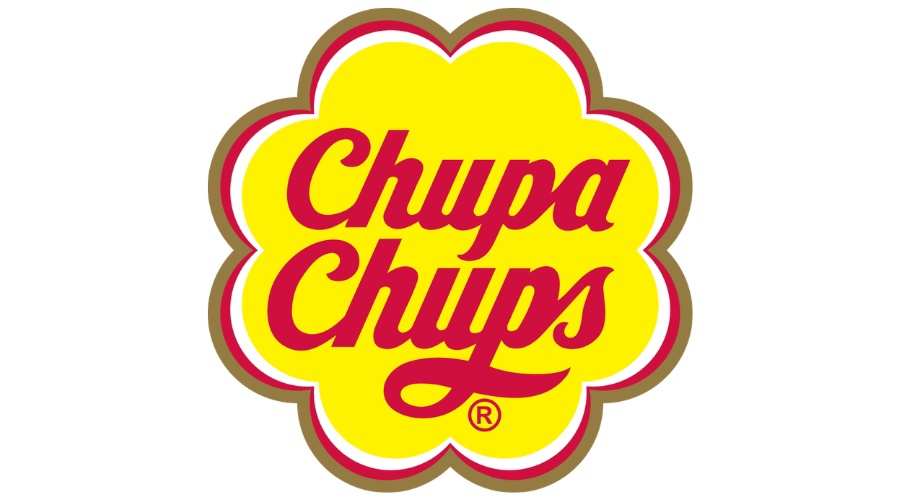
From educational tools to iconic branding, design has a funny way of showing up where you least expect it. You probably recognize the Chupa Chups logo, but you'd never guess surreal branding legend Salvador Dalí created it in 1969. This artist collaboration remains one of pop culture's most surprising creative moments.
Here's what makes it unforgettable:
- Dalí reportedly designed the logo in under an hour
- He suggested placing it on top of the candy, not the side
- The daisy-shaped design has barely changed in over 50 years
- It's one of the most recognized candy logos worldwide
You're fundamentally licking a Dalí original every time you grab one — and that's a weird flex nobody talks about enough.
Play-Doh Was Invented to Clean Walls, Not Entertain Kids
Dalí's logo wasn't the only household staple born from an unexpected origin. Play-Doh began life in the 1930s as a wallpaper-cleaning compound designed to remove soot and dirt from walls at a time when coal heating was common in American homes.
The soft material worked well for cleaning delicate wallpaper, but demand declined as cleaner heating systems became more widespread. Around the same time, teachers discovered that children loved molding and shaping the compound during arts-and-crafts activities.
Manufacturers removed the cleaning chemicals, added bright colors, and marketed it as a children's toy. The transformation became one of the most successful product pivots in business history. Few kids playing with Play-Doh today realize they're using a descendant of a wall-cleaning product.
A Color TV in 1954 Cost the Equivalent of $11,600 Today
Play-Doh's reinvention wasn't the only time consumer technology carried a jaw-dropping price tag. In 1954, you'd have spent around $1,000 on a color TV set — that's over $11,600 in today's money. 1950s pricing made color television a symbol of luxury electronics, not a household staple. Consumer inequality meant most families kept watching black-and-white screens for years.
Here's what that context really looks like:
- Color TV existed in the early '50s, but television accessibility was nearly impossible for average earners
- $1,000 represented several months of typical wages
- Most American homes didn't adopt color TVs until the mid-1960s
- Networks barely broadcast in color because so few could afford to watch it
Dracula* Was Published Closer to *Carrie*'s Release Than to *Frankenstein*'s
Historical timelines have a funny way of exposing how badly our instincts can mislead us. Many people naturally group Frankenstein and Dracula together as products of the same era of Gothic horror. The actual timeline tells a different story.
Mary Shelley's Frankenstein was published in 1818, while Bram Stoker's Dracula arrived in 1897. Stephen King's Carrie, meanwhile, was published in 1974. That means only 77 years separate Dracula and Carrie, compared to the 79 years between Frankenstein and Dracula.
The comparison feels wrong because our brains tend to lump classic horror stories into a single historical period. In reality, Stoker's famous vampire is almost as close to modern horror fiction as it is to Shelley's pioneering Gothic novel, making literary history far stranger than most people realize.
Jodie Foster Was Once Picked Up by a Lion on Set
Modern film productions are governed by strict safety regulations, which makes one story from Jodie Foster's childhood acting career particularly unbelievable. While filming Napoleon and Samantha in 1972, Foster found herself working alongside real lions used throughout the production.
During one scene, a lion unexpectedly grabbed Foster by the head and lifted her off the ground. Remarkably, she escaped without serious injury. The incident became one of Hollywood's most notorious examples of the risks actors sometimes faced during earlier eras of filmmaking.
Today, such a situation would be virtually impossible. Modern productions rely on extensive safety protocols, trained animal handlers, and visual effects to reduce risk. Foster's experience serves as a reminder of just how different Hollywood once was—and how much safety standards have changed over time.
Conclusion
One reason pop culture trivia remains endlessly entertaining is that it reveals how strange the stories behind familiar things really are. The songs, films, television shows, and cultural icons we take for granted often emerged through accidents, experiments, and unexpected decisions that nobody could have predicted at the time.
The deeper you look into entertainment history, the weirder it becomes. A chart-topping hit can come from a ten-minute songwriting session, a movie quote can originate from a real-life rock star, and a groundbreaking cultural milestone can appear decades earlier than anyone expects. That's why random trivia never gets old—there's always another surprising story waiting just beneath the surface.